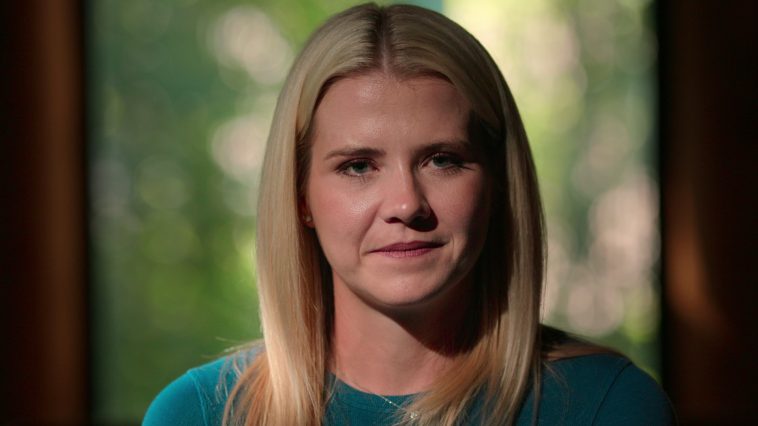
More than two decades after she was kidnapped from her bedroom as a teenager, Elizabeth Smart is once again telling her story — this time in her own words.
Now in her late 30s, Smart is a mother of three and a longtime advocate for survivors of abuse. Her experience is being revisited in a new Netflix documentary, Kidnapped: Elizabeth Smart, which explores the events of 2002 and the lasting impact they had on her life and family.
Although she has spoken publicly about her abduction before, Smart says the decision to revisit it now came from a desire to give her story meaning and context.
“After I was rescued, when I first got home, I did not want to talk about what happened with anyone,” she told Netflix’s Tudum. “But when the trial finally happened, I remember thinking that if all of this was going to be out there anyway, I wanted it to have some meaning.”
The Night She Was Taken
Elizabeth Smart was 14 years old when her life changed forever.
In the early morning hours of June 5, 2002, she was abducted from her family’s home in Salt Lake City, Utah. According to CNN, she was taken at gunpoint by Brian David Mitchell, a self-proclaimed street preacher who told her he was taking her to be his wife.
The only witness was her 9-year-old sister, Mary Katherine. Their uncle, Tom Smart, later said the young girl had been threatened into silence.
“She was paralyzed and in shock for a couple of hours until she went in and talked with her dad,” he said.
Detective Dwayne Baird, who investigated the case, said Mitchell was armed when he entered the home.
“He just walked out the door with her,” Baird told CNN. “He didn’t take a vehicle; he just left on foot.”
“I Never Said Yes”
In the moments after she was taken, Smart said she struggled to understand what was happening. Mitchell told her she was going to be his bride — something she immediately rejected.
“I thought, ‘He can’t be serious,’” she later told People in a January 2026 interview. “You can’t just kidnap a child and then say, you’re my wife now. It’s not legal. It’s not okay. I never said yes. I never said I do.”
Smart recalled trying to reason with him, explaining that what he was doing was wrong. Her pleas were ignored. When she screamed, Mitchell warned her that he would kill her and her family if she ever tried again.
What followed was even more terrifying.
He told her they were going to “consummate” their marriage. Smart said she did everything she could to delay the abuse, believing that someone would eventually find her.
“I tried to do everything I could to hold off the inevitable,” she said.
During the nine months she was held captive, Smart was raped repeatedly — sometimes up to four times a day. She described the first assault as painful and said she cried and begged him to stop.
Rescue and Aftermath
Smart was eventually rescued, ending a months-long search that had captured national attention.
Mitchell was later convicted of kidnapping and, in 2010, was sentenced to life in prison. His wife, Wanda Barzee, was also arrested and served time in prison before being released in 2018. In May 2025, Barzee was arrested again after violating the terms of her sex offender status by visiting two public parks.
Although the physical captivity ended years ago, the emotional impact of the ordeal remained.
When Smart returned home, she struggled to talk about what had happened. Testifying during the trial was especially difficult.
“I remember sitting on the stand and feeling like there was no context around my answers,” she said. “That’s when I realized I wanted to take ownership of my story.”
Telling Her Story on Her Own Terms
That desire ultimately led to the new Netflix documentary, which features archival footage and never-before-seen material. The film also includes interviews with her father, Ed Smart, now 70, and her sister Mary Katherine, now 33. Her mother, Lois Smart, chose not to participate.
“Some members of my family want to leave things in the past,” Smart said. “And I respect that.”
Her hope, she explained, is that the documentary helps others better understand the realities of trauma and survival.
“I hope people who watch this can gain compassion and understanding for other families who are going through this,” she said. “And I hope it brings comfort that there are happy endings — and that even after terrible things happen, you can still have a wonderful life.”