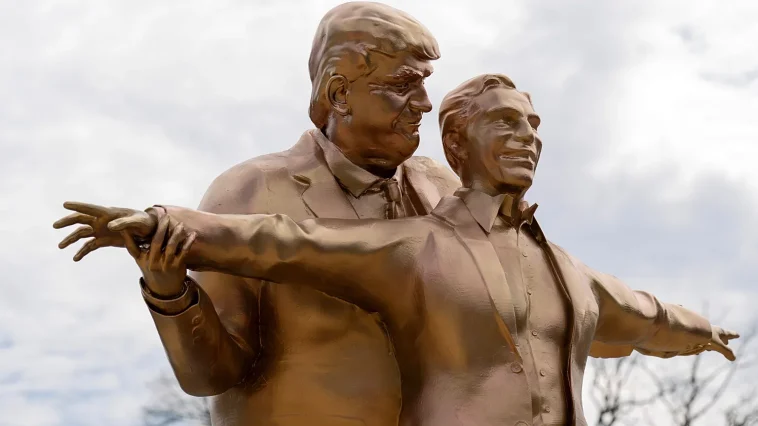
Public art has always had the power to stir emotions, challenge authority, and spark debate. In recent years, artists around the world have increasingly used sculptures and installations to comment on politics and the relationships between powerful figures. One controversial example briefly appeared in Washington, D.C., where a satirical statue depicting former U.S. President Donald Trump and financier Jeffrey Epstein drew immediate attention and intense public discussion.
An Unexpected Installation
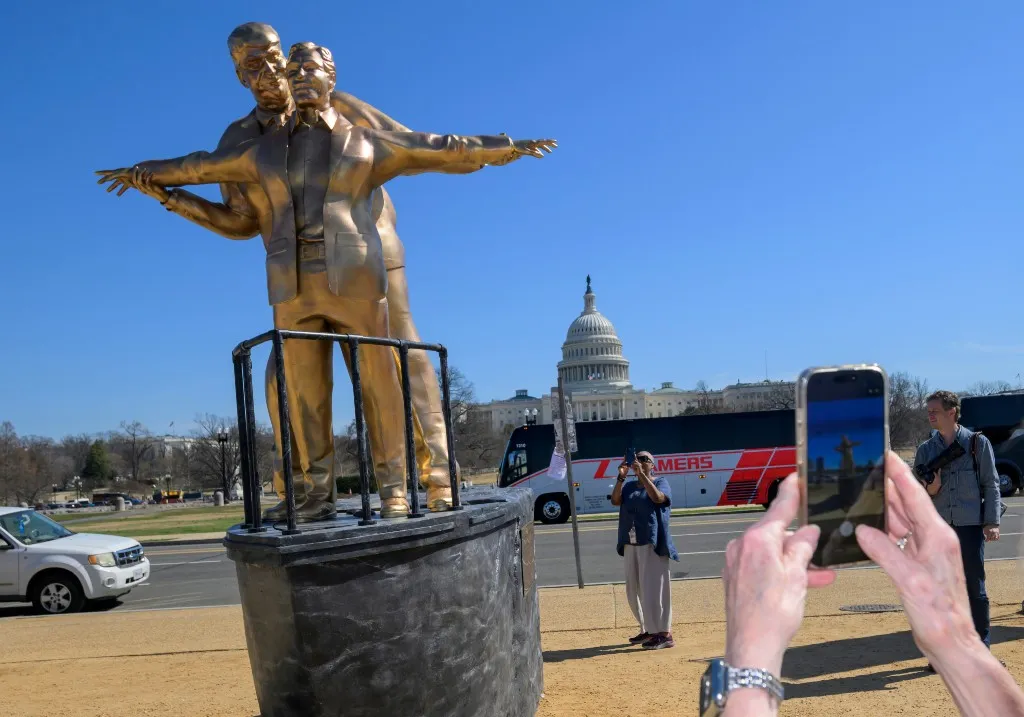
Visitors walking near the National Mall — one of the most symbolic public spaces in the United States — were surprised to see an unusual sculpture placed within view of famous monuments. The statue portrayed Donald Trump standing alongside Jeffrey Epstein in a theatrical pose, smiling and holding hands. The exaggerated style suggested that the piece was meant to provoke conversation rather than serve as a traditional monument.
The installation reportedly came from an anonymous group of activist artists. Their intention, according to comments shared with journalists, was to create a piece of political satire that would draw attention to the historical social connections between Trump and Epstein. By choosing such a prominent location, the artists ensured that tourists, reporters, and government officials would quickly notice the artwork.
The Meaning Behind the Artwork
The sculpture was not intended as praise for either figure. Instead, it was designed to critique what the creators described as a long-standing culture of influence among powerful elites.
Jeffrey Epstein, a wealthy financier who was convicted of sex-related crimes, maintained relationships with many influential individuals in politics, entertainment, and business. During the 1990s and early 2000s, Trump and Epstein were known to move within some of the same social circles, attending events and gatherings in places like New York and Palm Beach.
Trump has repeatedly said that he distanced himself from Epstein years before Epstein’s legal issues became widely known. Nevertheless, the history of their social association has remained a subject of public discussion and media scrutiny.
Through satire and exaggerated imagery, the artists appeared to be highlighting these connections while encouraging viewers to think more broadly about the relationship between wealth, power, and political influence.
Strong Reactions From the Public
It did not take long for the statue to become a magnet for attention. Passersby stopped to photograph the sculpture, and images quickly spread across social media.
Some observers praised the installation as a bold example of political satire and free expression. Supporters argued that art has long been used as a way to challenge powerful figures and raise uncomfortable questions.
Others reacted strongly against it. Critics called the statue politically motivated and said it unfairly suggested a deeper relationship between Trump and Epstein than what has been publicly confirmed. Supporters of Trump argued that the sculpture misrepresented the nature of their past association.
Why the Statue Was Removed
The controversy grew so quickly that authorities soon intervened. Officials stated that the statue had been placed on federal land without the proper permits required for public installations.
As a result, the sculpture was removed not long after it appeared. However, the brief display had already achieved what many protest artworks aim to do: capture public attention and spark widespread conversation.
Ironically, the removal only fueled further interest, as news outlets and online discussions continued to debate the meaning and implications of the piece.
When Art Becomes Political Protest
The Trump–Epstein statue fits into a long tradition of protest art. Throughout history, artists have used humor, symbolism, and exaggeration to question authority and challenge powerful individuals.
Unlike speeches or written commentary, visual art can deliver a message instantly. A single sculpture placed in a public space can provoke strong reactions and encourage people to reflect on controversial topics.
In this case, the statue pushed viewers to consider difficult questions about political relationships, social influence, and accountability among elites.
The Power of Location
The decision to place the statue near the National Mall was particularly meaningful. The area is home to monuments honoring presidents, historical leaders, and defining moments in American history.
By introducing a satirical installation into such a respected setting, the artists created a striking contrast between traditional monuments and modern political criticism. The placement itself became part of the statement, prompting discussions about who is remembered in public spaces and how society addresses controversial figures.
Final Thoughts
The Trump–Epstein statue may have been temporary, but the conversation it sparked was far from short-lived. Whether people viewed it as powerful satire or unfair political messaging, the artwork succeeded in drawing attention to larger questions about influence, power, and accountability.
Moments like this show how public art can do more than decorate a space. Sometimes, it can challenge people to confront uncomfortable realities — and start conversations that continue long after the artwork itself is gone.

